1. The Problem with Manual Job Spreadsheets
Active engineering job searches routinely involve 30 to 100+ applications over several months. Most developers attempt to track their progress using generic tools like Google Sheets, Excel, or Notion tables.
These manual spreadsheets inevitably break down under real-world conditions:
- –Friction Fatigue: Manually opening a spreadsheet, typing company names, pasting URLs, and adding timestamps after every application is exhausting and frequently forgotten.
- –Lost Job Descriptions: When a recruiter schedules a phone screen 4 weeks later, the original job posting URL is almost always a 404 dead link. You enter the interview blind.
- –Zero Document Provenance: Spreadsheets cannot tell you which specific resume variation or cover letter was submitted to which engineering manager.
Scoutly replaces disconnected spreadsheets with an automated, visual pipeline engineered specifically for high-velocity software applications.
2. The Four Lifecycle Stages
Your job search progresses through four structured stages. Every stage captures distinct metadata, automated triggers, and chronological history:
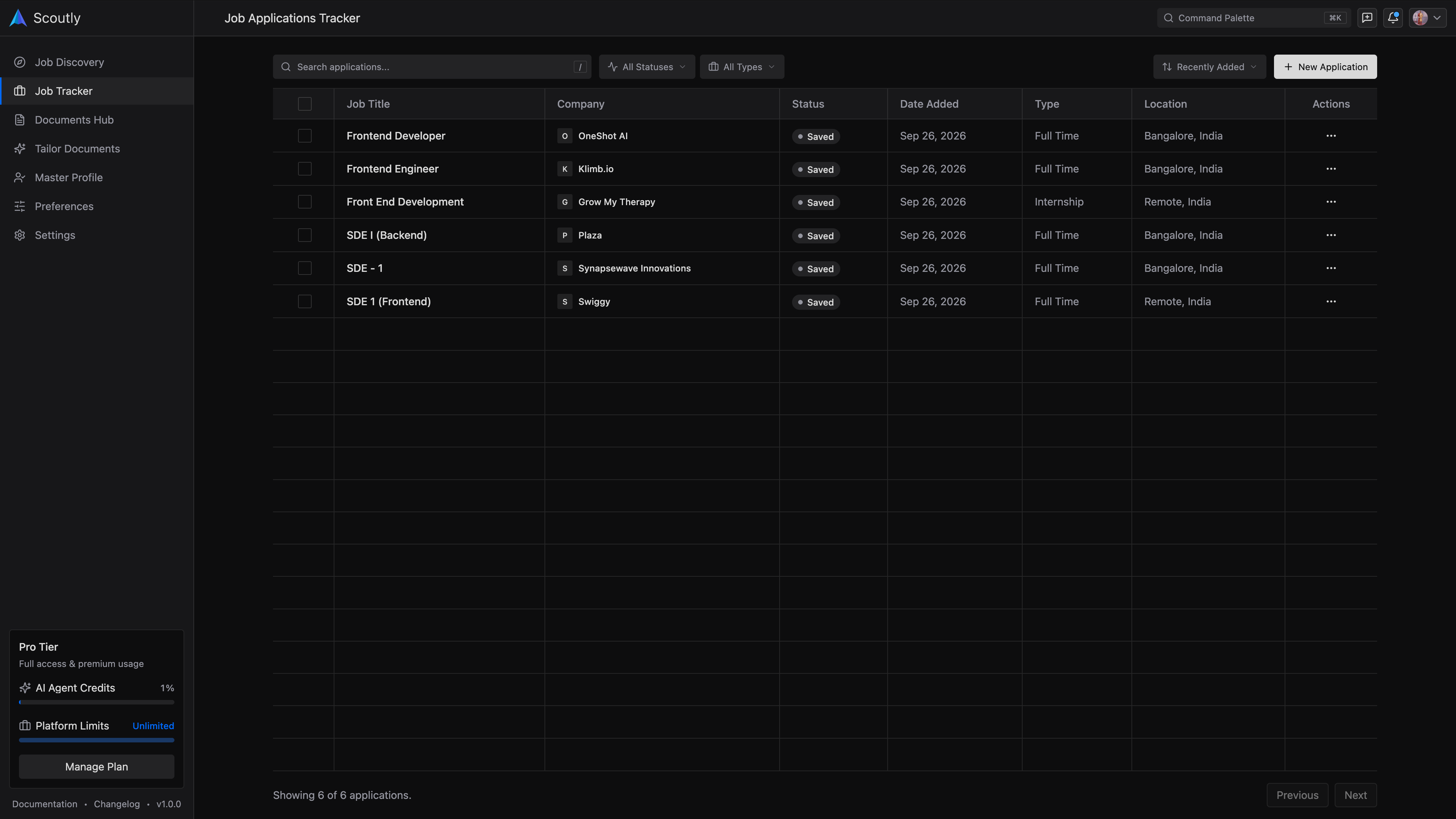
Wishlist
Centralized bookmarked opportunitiesSave promising roles from Ashby, Greenhouse, Lever, LinkedIn, or Scoutly's verified explore feed with one click. Store the original job description, compensation range, and hiring team details before the posting expires.
- –Captures original job posting text before companies unpublish the page
- –Auto-calculates ATS keyword match score against your Master Profile
- –Tags hiring managers, company size, and remote/hybrid policies
Applied
Automated submission confirmation & document bindingWhen you submit via our Chrome Extension or upload an external confirmation, the application automatically transitions to Applied with an immutable timestamp and the exact resume snapshot used.
- –Binds the exact Typst resume PDF variant and tailored cover letter
- –Records application portal URL and reference confirmation ID
- –Initializes follow-up timer alerts for recruiter response windows
Interviewing
Structured multi-round funnel managementBreak down interview loops into distinct sub-stages: recruiter screen, technical take-home, live system design, and onsite executive rounds. Log interviewer names, questions asked, and feedback notes.
- –Chronological event timeline for every interaction and round
- –Centralized repository for interview prep notes and technical cheat-sheets
- –Tracks interviewer profiles, panel members, and company context
Offer & Decision
Compensation modeling & negotiation leverageWhen offers arrive, log detailed total compensation breakdowns including base salary, annual target bonus, and equity vesting schedules to evaluate competing opportunities with total clarity.
- –Side-by-side total compensation comparison across multiple offers
- –Deadlines and expiration timers for exploding offer windows
- –Formal acceptance tracking and post-decision archival
3. Document Version Provenance
When you tailor a resume for an infrastructure engineering position versus a full-stack position, each document emphasizes different projects, technologies, and achievements.
Scoutly permanently binds the exact tailored Typst PDF binary to its application card in your Kanban pipeline:
Immutable Document Snapshots
Even if you modify your Master Profile later, the submitted version remains permanently preserved exactly as the recruiter received it.
Instant Interview Prep Review
One click from the Kanban card opens the exact PDF and STAR points submitted, allowing rapid review 5 minutes before your interview starts.
4. Automated Browser Extension Logging
The Scoutly Chrome Extension connects your browser directly to your Kanban pipeline. When you submit an application on Ashby, Greenhouse, Lever, or Workday, the extension detects the submission event and logs the application immediately.
Zero Manual Data Entry
Company name, position title, portal URL, and submission date are captured automatically in the background.
Real-Time WebSocket Synchronization
Your web dashboard updates in real-time without requiring a page refresh. The new card smoothly slides into the Applied column.
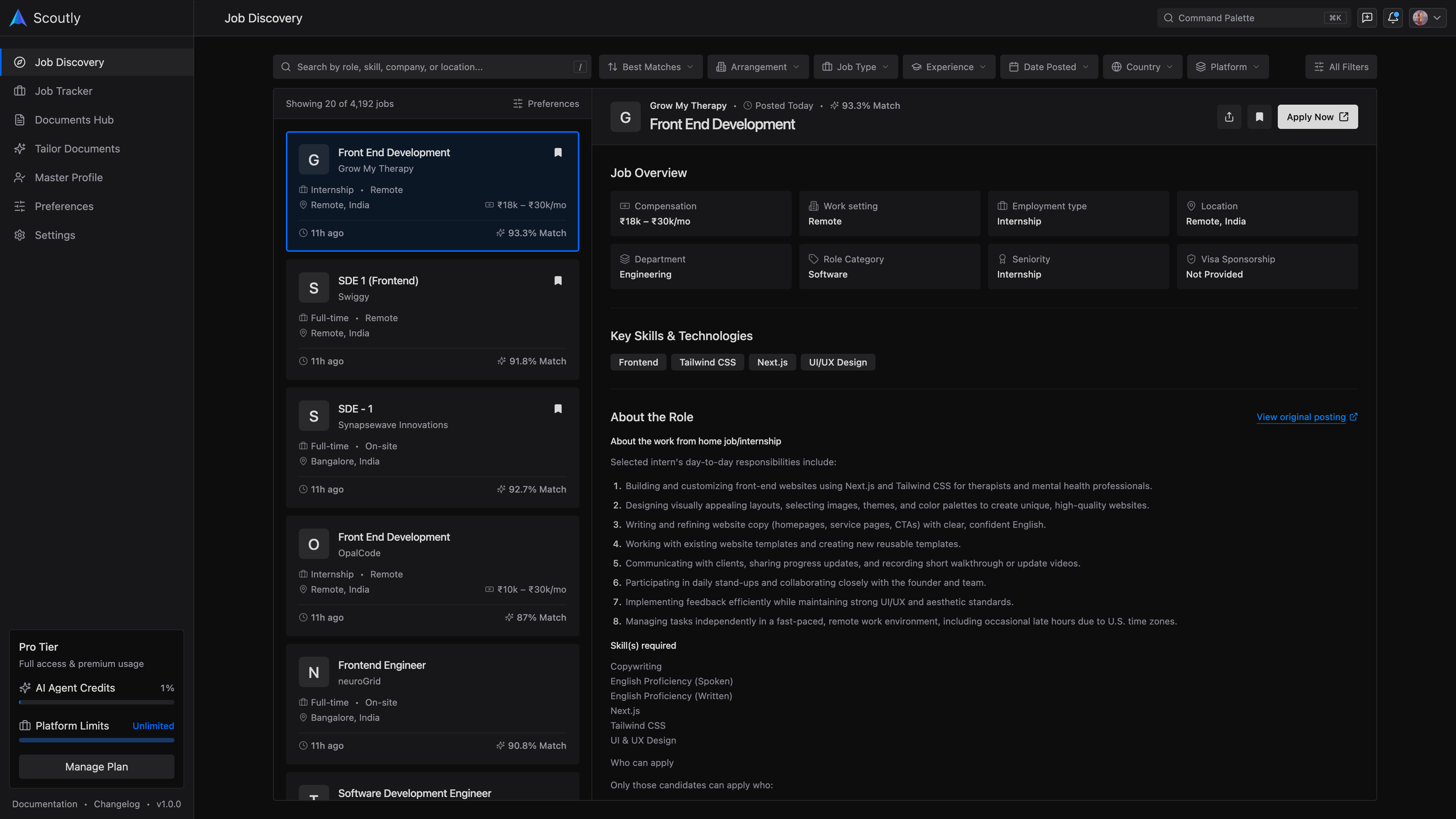
5. Integrated Job Discovery Bridge
The tracker is natively wired to Scoutly's verified job catalog. Browse verified engineering positions across high-growth startups and GCC tech hubs, filter by remote status or salary benchmark, and push listings straight to your Wishlist with a single click.
6. Interview Stages & Note Logging
Ace technical loops by maintaining structured notes for each round. Track recruiter call expectations, take-home repository links, live coding feedback, and system design architecture questions asked.
Round-by-Round Timelines
Keep interview dates, panelist LinkedIn links, and agenda topics neatly filed inside the card.
Offer Compensation Benchmarks
Compare competing offers side-by-side: base salary, equity vesting, signing bonus, and remote stipends.
7. Technical Comparison
How Scoutly's automated pipeline compares against traditional spreadsheets and disconnected tools:
| Capability | Scoutly Kanban Tracker | Manual Google Sheets / Notion |
|---|---|---|
| Submission Logging | Automated 1-click sync via Chrome Extension | Manual copy-pasting of URLs and company details |
| Resume Version Mapping | Exact tailored PDF binary bound to card forever | Untracked local files; impossible to verify what was sent |
| Job Description Persistence | Full text captured locally; survives deleted job posts | Broken 404 links when recruiters take down the job |
| Interview Note Funnel | Structured multi-round timelines & technical logs | Messy spreadsheet cells or scattered Notion blocks |
| Platform Discovery Bridge | One-click transition from Verified Jobs feed | Manual cross-referencing between disconnected tools |